Beginner's Guide to Kids Tennis: Equipment, Skills and Etiquette
What to buy, what your child actually learns first, and the unwritten court rules nobody explains beforehand, everything you need before lesson one.
Signing your child up for their first tennis lesson raises three practical questions almost every parent asks: what do we need to bring, what will they actually be taught, and are there unwritten rules we should know before we turn up. This guide answers all three in one place, equipment, skills, and etiquette, so you can walk into lesson one prepared instead of guessing, whether that's our regular Kids Tennis Ramsgate Beach programme or a one-off session. If you're still deciding whether tennis is the right fit for your child at all, we've covered what the evidence actually says separately.
Equipment: What Your Child Actually Needs
Racquet
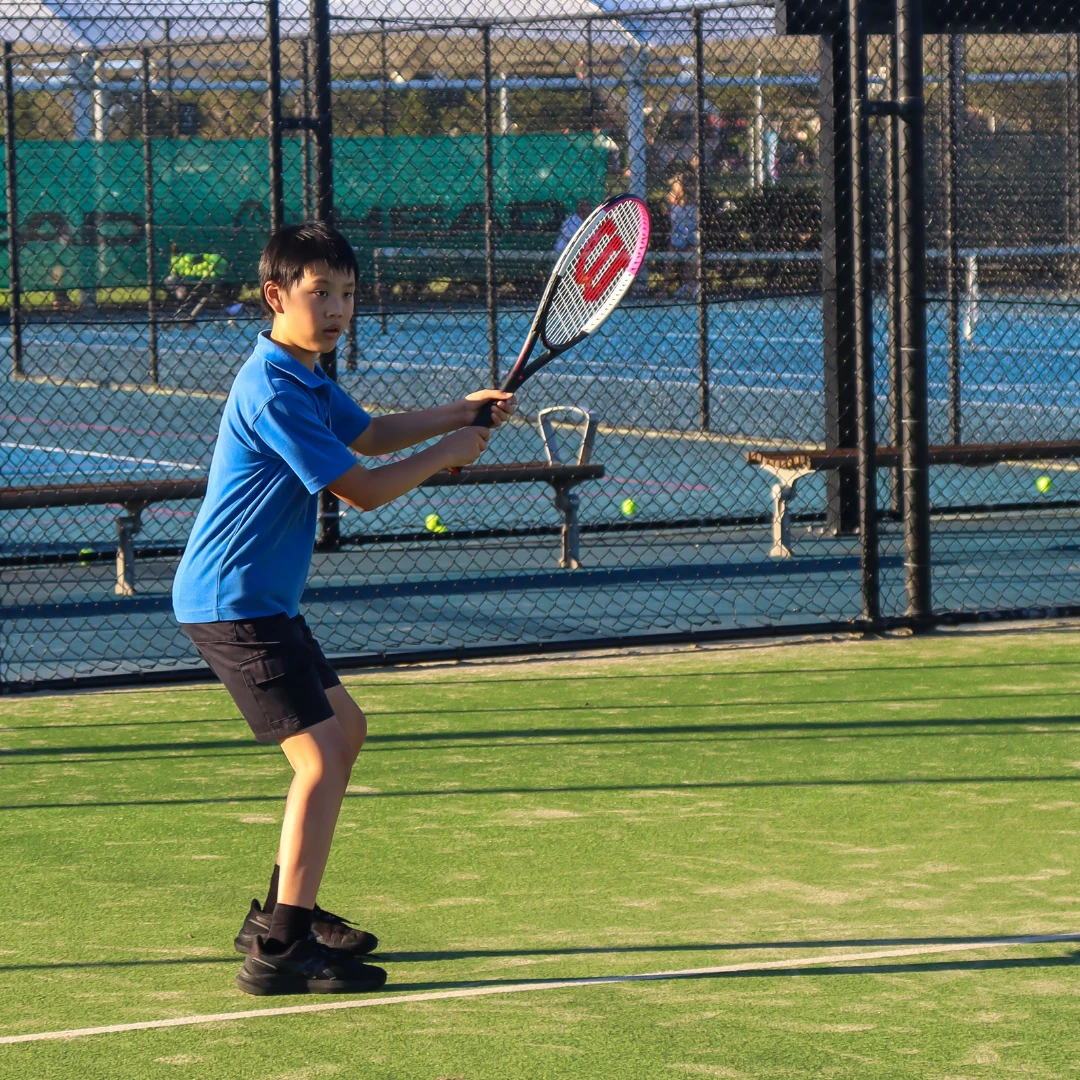
Sized to age and stage, not guessed by height alone, our Hot Shots programme uses a specific length for each ball colour stage from Red through to Yellow ball. Our coaches size it for free at the first session, or see the full stage-by-stage sizing breakdown.
Balls
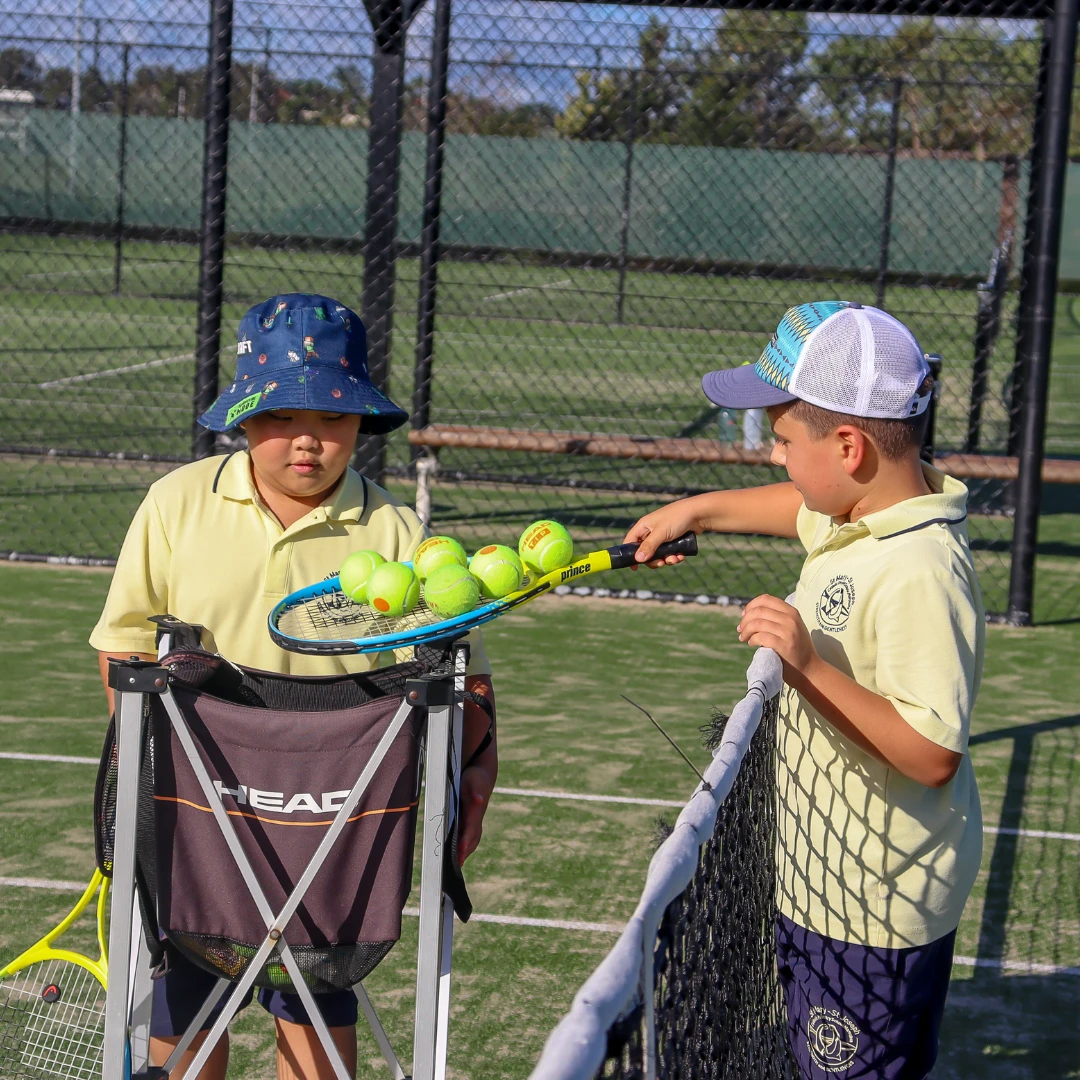
Beginners don't start on full-pressure yellow balls. Low-compression red, orange and green balls bounce lower and slower, so young players rally sooner and build confidence. Provided as part of the programme, no need to buy your own.
Shoes
Court shoes with a flat, non-marking sole grip better for tennis's side-to-side movement, and most facilities require non-marking soles anyway. Fit matters more than brand, leave a thumb's width of room at the toe.
What to Wear
Comfortable, breathable sportswear, plus sun protection: a hat shading the face, neck and ears, SPF50+ broad-spectrum sunscreen, sun-protective clothing, and UV-rated sunglasses. Book outside peak UV hours where you can.
What Not to Buy Yet
Skip the adult-sized racquet "to grow into," it slows skill development rather than helping it. A correctly sized entry-level junior racquet is genuinely the better choice, not a compromise.
Skills: What Your Child Will Actually Learn First
Early lessons focus on a handful of fundamentals before anything resembling a "real match":
- Grip and ready position. A simple "shake hands with the racquet" grip, plus a balanced, knees-slightly-bent ready position between shots.
- Forehand and backhand basics. Simple, repeatable swing patterns before power or spin, contact point and follow-through come first.
- Serve fundamentals. An easy toss-and-hit motion, full-service technique is a much later stage.
- Footwork and the split step. A small hop just before the opponent hits the ball, so kids react quickly instead of standing flat-footed.
- Hand-eye coordination. What the low-compression balls and smaller courts are really for, more successful contact, faster, which is what actually builds a beginner's confidence.
How scoring works. Most kids pick this up faster than parents expect: points go love (zero), 15, 30, 40, then game. If both players reach 40, that's deuce, and a player then needs two clear points in a row to win the game. If a set reaches six games all, it's usually settled with a tiebreak, first to seven points, win by two. Most kids are calling their own scores confidently within a few weeks. If your child wants more individual attention on any of these fundamentals, our private lessons option is worth considering alongside group sessions.
Etiquette: The Unwritten Rules Beginners Trip Up On
Tennis has more unwritten social rules than most sports kids play, and they're rarely explained upfront. The ones that matter most for beginners:
- Call the score before you serve. Server calls it first, this avoids disputes before they start.
- Give the benefit of the doubt. On a line call you're not sure about, the ball is in. Certainty, not preference, decides an "out" call.
- Return the ball properly. Send it back to your opponent directly and promptly, not off to the side or into the net on purpose.
- Acknowledge good shots. A quick "good shot" when an opponent earns a point is normal court manners, not something to only do when you're winning.
- Own a lucky point. If a net cord or mishit wins you a point, a small acknowledgement (a raised hand, a quick apology) is expected.
- Keep it quiet during a point. No coaching or shouting from the sidelines while play is live, and stay off neighbouring courts until their point has finished.
- Shake hands at the end, win or lose. This one matters more than any single rule on this list, it's the one coaches watch for most closely in young players.
None of this needs to be memorised before lesson one. Coaches introduce it gradually and reinforce it constantly, it becomes second nature well before a child plays anything competitive.
How Long Until They're "Good"?
This is the question almost every parent asks in week one, and the honest answer is that it depends less on natural talent than on how consistently a child turns up. Most kids can rally a handful of shots with a coach or partner within their first month on the modified balls, that's not a coincidence, it's exactly what the lower-compression, slower-bouncing balls are designed to make possible early. Real stroke consistency, the kind where a rally regularly goes back and forth more than a few times, usually takes a full term of weekly lessons rather than a single session. Progress through the ball colour stages (Red through to Yellow) is skill-based rather than time-based, so there's no fixed timeline to compare your child against, and that's by design too, it keeps the focus on genuine improvement rather than rushing a child onto a full court before they're ready.
What We See in a Child's First Few Lessons
In practice, the equipment questions resolve themselves fast, most kids are comfortable with their racquet and the modified balls within a session or two, that's the entire point of the Hot Shots progression. Etiquette takes a little longer, particularly calling their own lines honestly when a call goes against them, but it's also where we see the fastest visible growth in a child, not just as a player but as a teammate and competitor. The parents who get the most out of the first few weeks are usually the ones who don't worry about "winning" early on and instead let the coaching build the fundamentals properly, rushing a child onto a full-sized court and full-pressure ball too early is the most common thing we gently steer families away from.
Before Lesson One: A Quick Checklist
- Correctly sized junior racquet (or let us size it for free at the first session)
- Court shoes with a non-marking sole
- Hat, SPF50+ sunscreen, and a water bottle
- Comfortable, breathable clothing they can move freely in
- A relaxed attitude about winning, the skills come first
Prefer to try it in a lower-commitment format first? Our holiday tennis camps cover the same equipment, skills, and etiquette basics above over a single week, a good option if you're not ready to commit to term-time lessons yet.
Frequently Asked Questions
What size racquet does my child need to start tennis?
It depends on their Hot Shots stage rather than age or height alone, our Hot Shots Stages Explained guide has the full sizing breakdown by ball colour, or our coaches will size your child for free at their first lesson.
Do kids need special tennis shoes?
Ideally yes. A flat, non-marking sole grips better for the side-to-side movement tennis requires, and most facilities require non-marking soles to protect the court surface anyway.
What should my child wear to their first tennis lesson?
Comfortable, breathable sportswear plus sun protection: a hat that shades the face, neck and ears, SPF50+ broad-spectrum sunscreen, and UV-rated sunglasses if they'll wear them.
Do I need to buy real tennis balls for beginners?
No. Lessons use Tennis Australia's low-compression red, orange, or green balls depending on stage, these are provided as part of the programme.
What's the first tennis skill kids usually learn?
Grip and ready position, followed quickly by basic forehand and backhand contact. Power and spin come much later.
How does tennis scoring work?
Points go love, 15, 30, 40, then game. Both players at 40 is deuce, and you need two clear points in a row from there to win the game.
What happens at deuce in kids' tennis?
The same as any level, a player needs to win two consecutive points after deuce to take the game. Coaches introduce this gradually rather than expecting kids to track it alone from day one.
What tennis etiquette should young beginners know?
Calling the score before serving, giving the benefit of the doubt on close line calls, returning the ball properly to their opponent, and shaking hands at the end regardless of the result.
Is it rude for a child to celebrate winning a point?
A normal, controlled reaction is fine, coaches generally steer kids away from anything that could read as mocking or over-celebrating against an opponent, since good sportsmanship is part of what's being taught alongside the strokes.
How much does beginner tennis gear cost?
A correctly sized junior racquet is the main cost, and it's a modest one since you're buying an entry-level junior racquet, not an adult racquet. Shoes and sun gear are often things families already own. Balls are provided in lessons.
Ready to Book Lesson One?
Sign up now and get a FREE TRIAL lesson at Scarborough Park Sports Centre, Ramsgate Beach, and let one of our coaches size their racquet and walk them through their very first session.
Sign Up Now & Get a FREE TRIAL