
What Tennis Really Does for Kids: 7 Evidence-Based Benefits
Bone health, coordination, focus, and a sport they can keep playing for life: here's what the research actually says, plus what we watch for as coaches.
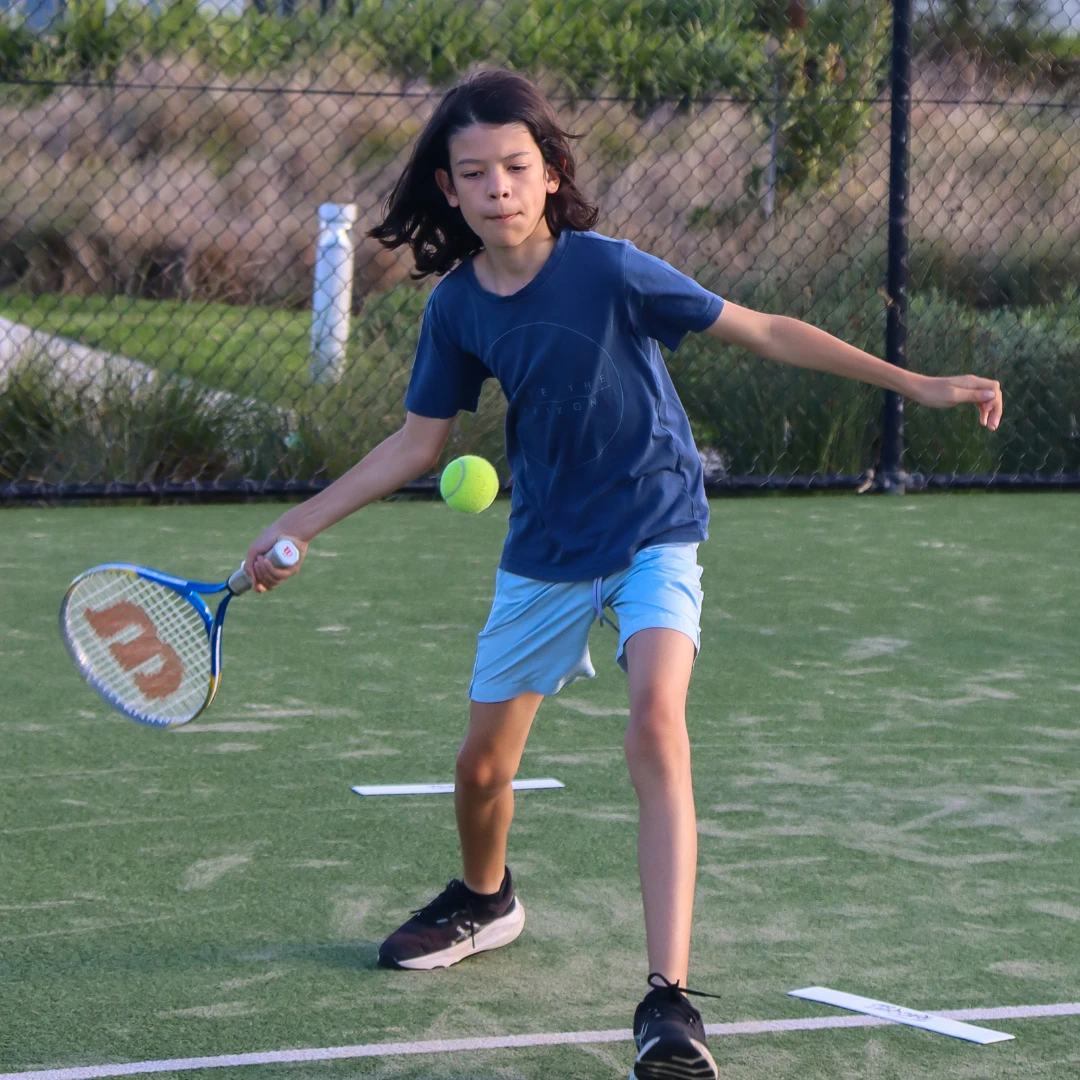
Short answer: yes, tennis is one of the better sports you can put a child in, backed by evidence on bone development, cardiovascular health, coordination, and even long-term life expectancy. It's not risk-free, and it's not automatically the right fit for every child, but the research case for it is genuinely strong. Here's what the evidence actually says, plus what we watch for as coaches running Hot Shots sessions every week at Scarborough Park.
7 Evidence-Based Benefits
Meets Australia's Activity Guidelines
The Australian Government's 24-Hour Movement Guidelines recommend at least 60 minutes a day of moderate to vigorous activity, including bone-strengthening activity 3 days a week. A single Hot Shots session covers both at once.
Builds Genuinely Stronger Bones
A study of players aged 7 to 14 found their playing arm developed 9 to 23 percent more bone mineral content than their non-playing arm, strongest around pre-puberty to early puberty.
Develops Coordination Early
Tracking a moving ball, judging distance, timing a swing and adjusting footwork all happen at once, exactly why Hot Shots starts kids as young as 3 on foundational movement before a racquet is even introduced.
Teaches Focus and Emotional Regulation
Played mostly one-on-one with no teammate to lean on, tennis builds self-reliance and teaches kids to manage frustration in real time, a skill that transfers well beyond the court.
Social, Just Differently
Group Hot Shots sessions are built around pairs and small groups. Kids rally with each other, cheer each other on, and build friendships with the same group week to week.
A Sport People Keep Playing for Life
The Copenhagen City Heart Study found tennis associated with the largest life expectancy gain of any sport studied in adults (+9.7 years), an association, not proof of causation, but a strong reason to build the habit young.
A Genuinely Accessible Entry Point
Tennis Australia's Hot Shots framework scales the court, ball and racquet to a child's age, so a 5-year-old plays an appropriately-sized version of the sport from day one. Full breakdown of how that works here.
2 Things to Watch For
- Overuse injury, mostly at higher training intensity. Research on elite junior tennis players found 41 percent reported at least one injury in the past year, with overuse injuries making up close to half of all health problems. That data describes competitive academy-track juniors training at high volume, not a child doing a weekly recreational session. Keep tennis one of several activities early on rather than a single-sport, year-round commitment.
- Starting on the wrong equipment for their age and stage. The biggest avoidable risk isn't the sport, it's a child handed adult-sized gear before they're ready. A ball that bounces too high and fast to track leads to poor technique habits and knocks confidence, sometimes enough that a child decides tennis "isn't for them" when the real issue was the equipment.
What Age Should Kids Start?
Tennis Australia's Hot Shots framework starts as young as 3, with the Blue stage focused purely on foundational movement rather than technical tennis skills. There's no single "correct" starting age beyond that, a coach watching a child's coordination and confidence in a trial session is a far better guide than age alone. If you want the full stage-by-stage breakdown (Blue through to standard Yellow ball), we've covered it in detail separately.
What I've Seen on Court at Scarborough Park
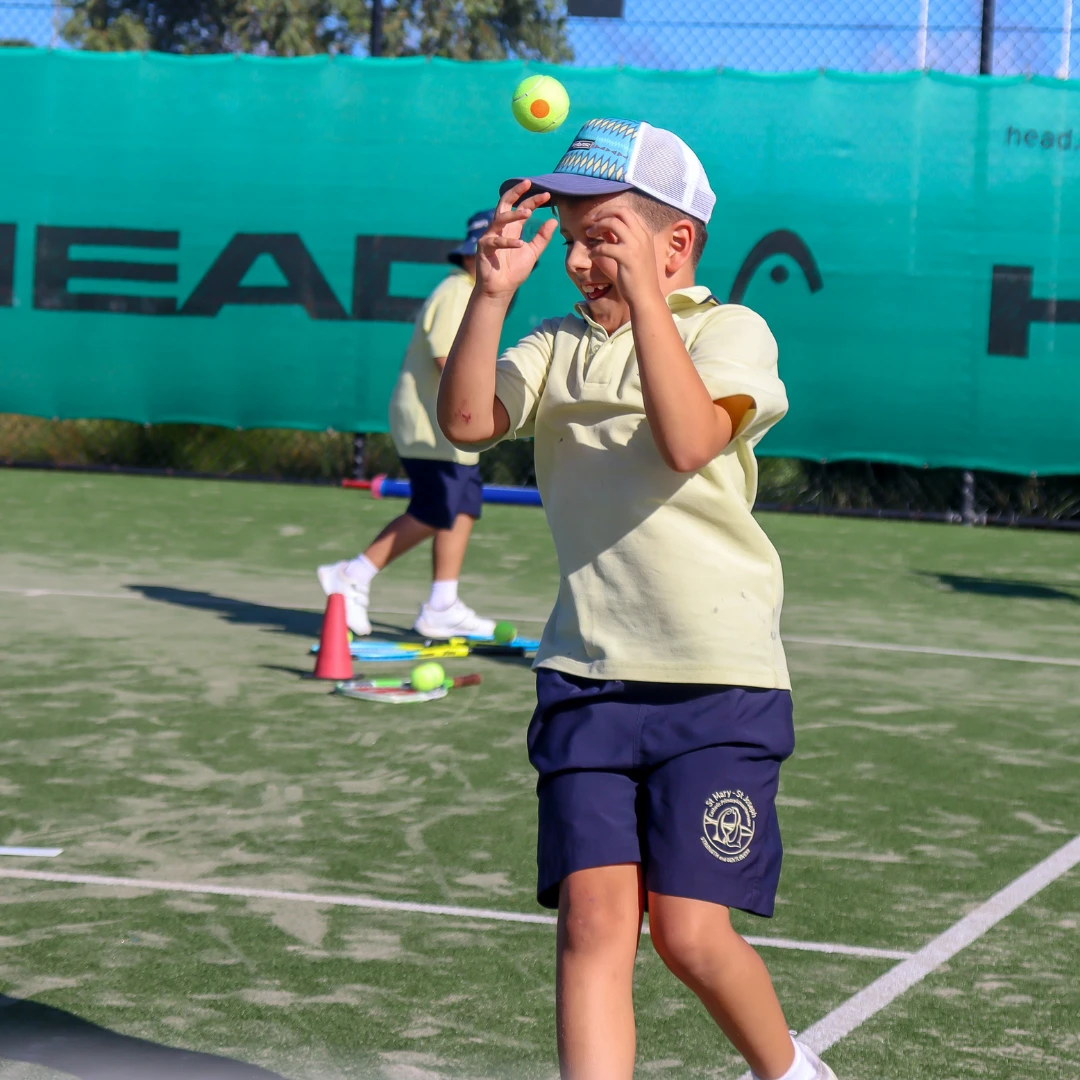
In practice, the kids who stick with tennis longest aren't necessarily the most naturally gifted, they're the ones who started on equipment that actually suited them and had fun early, rather than being pushed onto a full court before they were ready. We regularly see five and six-year-olds who were nervous in their first session become genuinely confident within a term, once they're playing at a stage where they can actually make contact with the ball and see progress.
How to Get Started Safely
- Start with a trial session so a coach can assess coordination and confidence, not just age.
- Confirm your child will be placed on scaled equipment (smaller court, softer ball, shorter racquet), not adult-sized gear.
- Keep it one of several activities early on rather than a single-sport commitment, particularly before age 10.
- Watch for complaints of ongoing elbow, shoulder or wrist discomfort and get it checked rather than pushing through.
- Reassess progress each term with the coach rather than assuming a fixed timeline.
Frequently Asked Questions
Is tennis a good first sport for kids?
Yes. It builds coordination, meets Australia's daily activity guidelines, and Tennis Australia's Hot Shots framework scales the court, ball and racquet to a child's age, so young beginners aren't overwhelmed by adult-sized equipment.
What age can kids start playing tennis?
As young as 3, starting with foundational movement skills (Blue stage) before technical tennis skills are introduced. There's no single correct age beyond that, readiness matters more than a birthday.
Does tennis really help bone development?
A study of players aged 7 to 14 found their playing arm developed 9 to 23 percent more bone mineral content than their non-playing arm over 9 months, with the strongest effect around pre-puberty to early puberty.
Is tennis safe for kids, or is injury risk high?
For recreational, multi-sport kids, risk is low. The injury data that shows higher rates (around 41 percent of players injured per year) comes from studies of elite, competitive juniors training at high volume, a very different situation from a weekly Hot Shots session.
Is tennis a good sport for shy or introverted kids?
Often, yes. It doesn't require the constant verbal coordination team sports do, while still being genuinely social through small-group coaching and regular rallying with the same peers.
How many times a week should a child play tennis?
For recreational players, one to two sessions a week alongside other activities is a reasonable start. Higher frequency is fine as interest and skill grow, but early specialisation raises overuse injury risk.
Does tennis count toward daily physical activity guidelines?
Yes. Australia's 24-Hour Movement Guidelines recommend 60 minutes of moderate to vigorous activity daily, including bone-strengthening activity 3 days a week, and a tennis session covers both.
Is it true tennis players live longer?
An observational study (the Copenhagen City Heart Study) found tennis associated with the largest life expectancy gain of any sport studied in adults, but it shows association, not proof the sport itself causes it. It's a reason to build the habit young, not a medical guarantee.
What's the biggest mistake parents make when starting a child in tennis?
Starting them on equipment sized for adults rather than scaled to their age and stage. It's the single biggest reason kids get discouraged early, not lack of ability.
How do I get my child started at Scarborough Park?
The easiest first step is a free trial lesson, so a coach can assess your child's stage before you commit. Sign up now and get a free trial to get started.
Curious If Tennis Is Right for Your Child?
Sign up now and get a FREE TRIAL lesson at Scarborough Park Sports Centre, Ramsgate Beach, and let one of our coaches show you firsthand.
Sign Up Now & Get a FREE TRIAL